How Much Does a Dental Implant Cost in 2026?
Tooth Compass does not publish its own dental implant price range. We do not have a representative sample of current provider quotes, claims or patient payments from which to calculate a defensible national average. A useful cost figure comes from a current written treatment plan after an examination.
This guide focuses on one common treatment configuration - one missing tooth, one implant and one crown. It breaks the quote into components, shows which items can change the total, and covers insurance, financing and alternatives. Prepare questions about alternatives, treatment stages and written costs with the dental consultation guide.
To compare two written proposals, start with the Dental Implant Quote Comparison Calculator. It lets you enter the amounts and quantities shown by each office for placement, abutment, crown, imaging, extractions, grafting, other named fees and a written plan contribution. It has no directory-created price defaults or city multiplier.
Confirm the clinically appropriate treatment and itemized total after an examination with a licensed dentist.
What a Dental Implant Costs, Component by Component
An implant restoration can involve several procedures and parts, sometimes billed separately and completed over multiple visits. Use this table to normalize two proposals for one tooth:
| Component | What the written proposal should state |
|---|---|
| Consultation and exam | Examination type, treating clinician, fee and whether it is credited or bundled |
| Imaging | Image type, clinical purpose, fee and whether existing images can be used |
| Tooth extraction, if proposed | Tooth number, procedure description, code if supplied and fee |
| Bone graft or site preparation, if proposed | Site, procedure, material or method as stated, and fee |
| Implant fixture and placement | Implant system, placement service, clinician, anesthesia and facility fee |
| Abutment | Provisional or final component, quantity and whether it is bundled |
| Final implant crown | Material, laboratory work, placement, adjustments and remake terms |
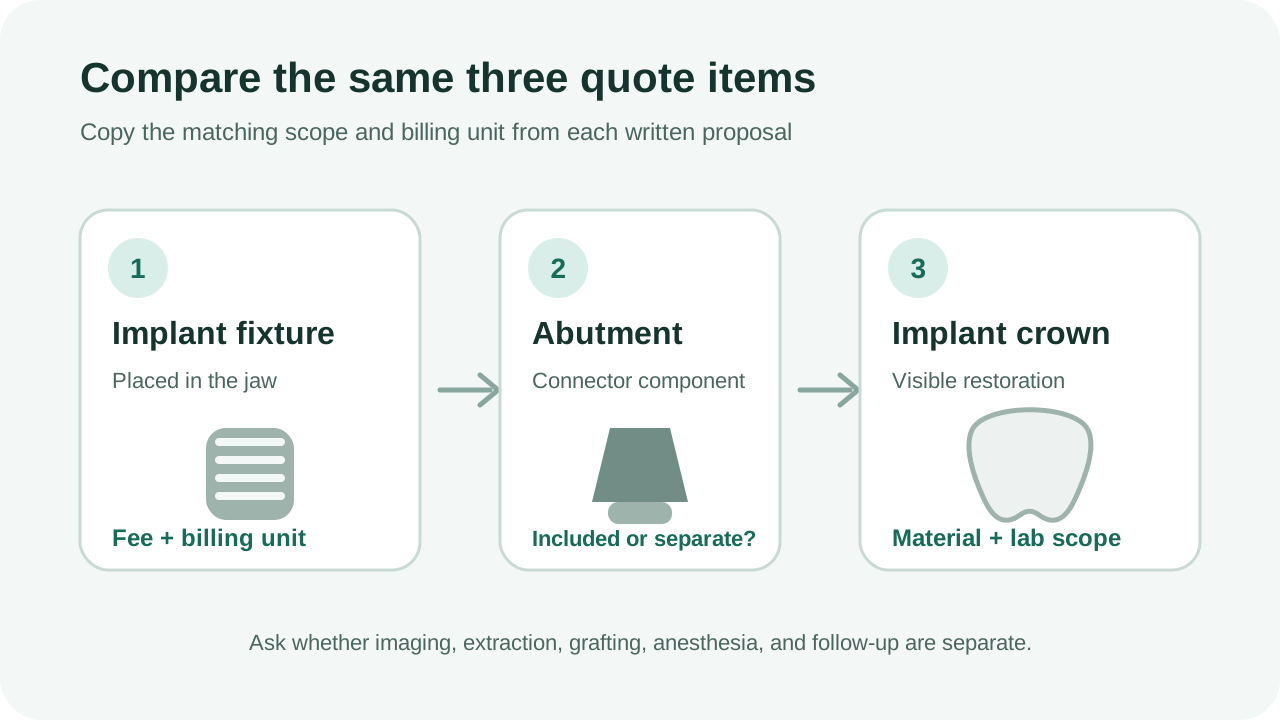
The core three are the fixture and placement, abutment and final crown. A written quote may bundle or separate them. Compare the same scope and ask whether examination, imaging, anesthesia, a temporary tooth and follow-up are included.
How Tooth Compass Handles Cost Information
Tooth Compass provides a scope and billing-unit framework instead of inventing an amount. Directory listings do not contain a representative price sample. Professional-association and government material supports procedure or insurance context, but it does not establish what a particular office should charge.
For an independent location-specific reference, use the FAIR Health Consumer cost estimator with your ZIP code and its current methodology, then request written, itemized estimates from local providers. Match procedure codes and billing units; do not treat an external benchmark as a quote.
The Core Three: Post, Abutment, Crown
The implant post (also called the fixture) is the screw-shaped piece surgically placed in the jawbone and intended to integrate with the bone during healing. Ask whether the placement line includes the fixture, local anesthesia, surgical guide, facility and planned follow-up. Sedation options, appropriateness and billing vary, so ask the clinician what is recommended and included.
The abutment is a connector between the implant and the visible restoration. Check whether it is included in an advertised price and whether the plan uses a separate provisional or final abutment.
The implant crown is the visible tooth, custom-made by a laboratory or office workflow to match its neighbors. It is different from a crown cemented onto a natural tooth. Ask which material, design, laboratory work, placement and adjustment or remake terms each quote includes instead of transferring a price from another category.
Prep Work: Extraction, Grafting, Imaging
Not every case needs the same preparation, so quotes can differ even when they refer to the same missing tooth.
If a tooth still needs removal, the proposal should identify the tooth number and extraction procedure. When the clinician determines that additional bone is needed, bone grafting should appear as a named procedure with the site, material or method as stated, billing unit and fee.
CBCT imaging, a cone beam 3D scan, may be selected when the clinician needs three-dimensional information for planning. Ask which images are clinically necessary and whether each one is bundled or separately billed.
What Moves a Quote Up or Down
Quotes for the same tooth can differ because the clinical scope, provider roles, materials, bundling, and location are not identical. The factors below are comparison prompts, not a model that explains every price difference.
Who Places It: Specialist vs General Dentist
Implants may be placed by oral surgeons, periodontists, or general dentists with relevant training, while the restoration may involve a general dentist or prosthodontist. Ask who performs and bills each phase rather than assuming that a specialist or single-provider arrangement has a particular price.
A single-provider office is not automatically cheaper or worse. What you want to know is who does each phase, how many implants they place in a year, and how a complication would be handled between offices.
Titanium vs Zirconia, and the Crown Material
Titanium and zirconia are material terms that can appear in implant proposals. Material choice is clinical and system-specific, so confirm what the quote assumes and ask the treating team to explain the tradeoffs for your case.
Material, laboratory work, design and bundling can change the crown line. Ask for the implant manufacturer and model, crown material, laboratory scope and plan for sourcing compatible parts if future service is needed.
How to Check Prices in Your ZIP Code
Location may affect an individual provider’s fee, but Tooth Compass does not maintain an observed city-level provider-price dataset. It therefore does not assign a premium to a metro, rank cheap or expensive cities, or publish state averages.
Use the Dental Implant Cost and Quote Comparison Guide to identify the scope and billing units to compare. For an independent geographic reference, search FAIR Health Consumer using your ZIP code, then collect itemized local estimates for the same fixture, abutment, crown and conditional services. FAIR Health uses its own claims methodology; Tooth Compass does not copy its figures into this page.
One Tooth, Several Teeth, or a Full Arch
Implant pricing does not scale in a straight line, and knowing the tiers keeps you from comparing incompatible quotes.
One tooth is the fixture, abutment and final crown scope this guide covers, plus any clinically required services named in the treatment plan.
Several missing teeth in a row may be treated with an implant-supported bridge, individual implants, or another prosthetic design. A bridge can use fewer implants than the number of replacement teeth, but only the treating team can determine the safe number and position of supports.
A fixed full-arch restoration uses a different billing unit and prosthetic design. Our All-on-4 cost guide explains how to compare a row of replacement teeth supported on implants. A quote for one arch is not a full-mouth total.
Full-mouth treatment ordinarily refers to both upper and lower arches, but the plan may combine fixed bridges, removable overdentures and individual restorations. Our full-mouth cost guide explains the arch-level scope. Confirm the unit before comparing figures; multiplying a single-tooth quote across a mouth is not a reliable estimate.
Insurance: What Actually Gets Covered
Dental insurance and implants have an awkward relationship. Some plans exclude implants, while others may contribute to selected services subject to deductibles, coinsurance, waiting periods, exclusions, and an annual maximum. The American Dental Association’s overview of dental benefits explains common plan terms, but only your plan documents and a written pre-treatment estimate can show what applies to your case.
Even when a plan contributes, a substantial patient balance can remain. A new policy may also have a waiting period or a missing-tooth provision. Do not assume either applies: verify the effective date, exclusions, annual maximum, and treatment codes with the insurer.
Two moves turn the guesswork into numbers:
- Request a pre-treatment estimate. Your dentist’s office can submit planned procedure codes to the insurer. The response explains how the plan expects to process them, but it is not a guarantee of final payment.
- Ask whether clinically appropriate timing crosses plan years. Different phases may fall in different benefit years, but insurance timing should never delay urgent care or override healing intervals and the treatment sequence chosen by the clinician.
Medical coverage may be relevant in limited accident or medical circumstances. Ask both carriers when applicable and rely on written plan responses rather than assuming that either policy will contribute.
Ways to Pay: Financing, HSA/FSA, Memberships
A practice may offer an in-house payment plan, third-party financing, both, or neither. Financing spreads payment rather than lowering the cash price. Check the APR, term, fees, total of payments, prepayment terms, and whether a promotion uses deferred interest that may become due if its payoff conditions are not met.
Cheaper levers worth checking before you borrow:
- HSA/FSA funds. Dental treatment may qualify when it meets the medical-expense rules in IRS Publication 502. FSA plan rules and documentation requirements can differ, so confirm eligibility with the plan administrator before paying.
- Dental school clinics. Some university programs provide supervised implant care. Ask the program directly about eligibility, current fees, appointment length, number of visits, and which stages it provides.
- In-house membership plans. If an office offers a membership with stated discounts or fees, read the exclusions and compare the total treatment price; it is not dental insurance.
Implant vs Bridge vs Denture: The Cost Comparison
No one option is automatically the highest or lowest for every case. First ask a licensed dentist which designs are clinically appropriate, then compare current written proposals with the correct billing units.
| Option | Comparison unit | What the proposal should identify |
|---|---|---|
| Single implant | One replacement tooth | Fixture and placement, abutment, final crown and conditional services |
| Traditional bridge | Named unit count and supporting teeth | Abutment teeth, pontic, material, temporary restoration, laboratory work and placement |
| Removable partial denture | One appliance or arch | Framework, tooth and base materials, clasps, try-ins, delivery and adjustments |
| Complete denture | One arch | Records, try-ins, material, delivery, adjustment period and reline terms |
A conventional bridge avoids implant surgery, but conventional preparation removes tooth structure from the supporting teeth; other bridge designs have different indications and tradeoffs. Compare the complete bridge scope rather than multiplying a crown figure by a unit count.
Dentures use different appliance and per-arch scopes. The comparison checklist lives in our dentures cost guide.
Long-term costs are case-specific. An implant fixture can remain in service for many years, but the crown, abutment, screws, surrounding tissues, and competing bridge or denture options can all need maintenance or replacement. There is no universal lifetime-cost winner, so compare likely maintenance, clinical risks, and the condition of neighboring teeth as well as the initial fee.
Questions to Ask About a Low Implant Price
A low advertised implant price may cover only one phase or depend on eligibility and add-ons. Before treating it as a complete price, ask for a written estimate that identifies every included and excluded item. Watch for:
- A fixture-only quote. An advertised figure may cover surgical placement but exclude the abutment, crown, or other services. Ask for the complete per-tooth scope in writing.
- A firm total before clinical assessment. A reliable treatment plan normally follows an examination and whatever imaging the clinician considers appropriate. A phone estimate can be a useful starting band, but it cannot account for bone, gum health, extraction difficulty, or grafting.
- No implant system identified. Component compatibility varies by system. Ask for the manufacturer and model in your records so another clinician can identify parts if future service is needed.
- Discounts with a countdown. Time-limited pricing can make comparison difficult. Pause long enough to verify the clinician, full scope, cancellation terms, and whether the offer changes your treatment choices.
- Vague answers about who operates. Ask for the clinician’s name and role, relevant training, and who handles follow-up between visits.
None of these automatically means bad care. Each one means the final scope or total is not yet clear enough to compare.
Dental Tourism: Read the Fine Print on the Savings
An international quote may show a lower treatment price than a US quote, but the comparison must include the same clinical scope plus travel, lodging, time away, and every required visit. Implant placement and final restoration can occur at different stages, so obtain the proposed timeline rather than assuming one trip or a particular protocol.
The practical catch is aftercare. If anything needs adjustment later, the original clinic may be far away, warranty terms may be difficult to use locally, and a US dentist inheriting an unfamiliar implant system may need to identify or source compatible parts. Licensing, training, materials, infection-control oversight, and complaint processes depend on the jurisdiction and provider, so verify each clinic rather than drawing conclusions from the country alone.
If you still want to price international care, compare complete itemized plans, get the implant brand and model in writing, and line up a local dentist willing to take over maintenance before you commit to anything.
Dental Implant Cost FAQ
Why are dental implants so expensive?
The complete one-tooth scope can include surgical placement of the fixture, connector hardware and a laboratory-made crown, plus any required examination, imaging, anesthesia, temporary restoration and follow-up. Ask which of those components the written proposal includes.
Is a dental implant worth it?
An implant can replace a tooth without preparing the two neighboring teeth for conventional bridge crowns, but it is not the only possible design that may preserve adjacent tooth structure. It also requires surgery and ongoing maintenance. Whether it offers good value depends on bone, gum health, the neighboring teeth, alternatives, and patient priorities - all clinical decisions.
What is the cheapest way to replace a missing tooth?
Tooth Compass cannot determine that from a directory article. A removable appliance, bridge and implant have different clinical requirements, billing units and maintenance. Ask which options are appropriate, then compare complete written proposals and likely maintenance; no option is automatically cheapest over a lifetime.
How much does a dental implant cost with insurance?
Coverage depends on the plan, procedure codes, network rules, exclusions, deductible, coinsurance, and remaining annual maximum. Request a pre-treatment estimate, then confirm that it is not a guarantee of payment and ask what could change the final patient balance.
Does the advertised price include the crown?
Sometimes not. A low advertised figure may cover fixture placement only, with the abutment, crown, imaging, anesthesia, extraction, or grafting billed separately. Compare written estimates with the same scope and ask which items are clinically necessary for your case.
How long does a dental implant take from start to finish?
The schedule depends on healing, whether extraction or grafting is needed, the implant and restoration plan, and the clinician’s sequencing. Ask for a written timeline that identifies the surgical, healing, temporary-restoration, and final-restoration stages for your case.
This article is for informational purposes only and does not constitute medical or dental advice. Implant placement is a surgical procedure - candidacy, risks, and treatment options should be evaluated by a licensed dentist, periodontist, or oral surgeon.
Pricing method: Tooth Compass does not publish a dental implant price average or directory-created range because it does not hold a representative sample of current provider quotes, claims or patient payments. Always request a written, itemized treatment plan before scheduling.
Financing examples are illustrative only, not financial advice. Rates, terms, insurance coverage, and HSA/FSA eligibility vary - review the full terms with the lender, your insurer, and where relevant a tax professional.
Find dental implants near you
Browse the dental implants practice directory to reach city comparisons that currently have enough evidence-matched profiles. Confirm the scope and itemized quote directly with each practice.
Browse dental implants clinics →
Use the Dental Implant Cost and Quote Comparison Guide to compare the scope, billing units, possible separate fees and independent ZIP-level lookup steps for a single replacement tooth.