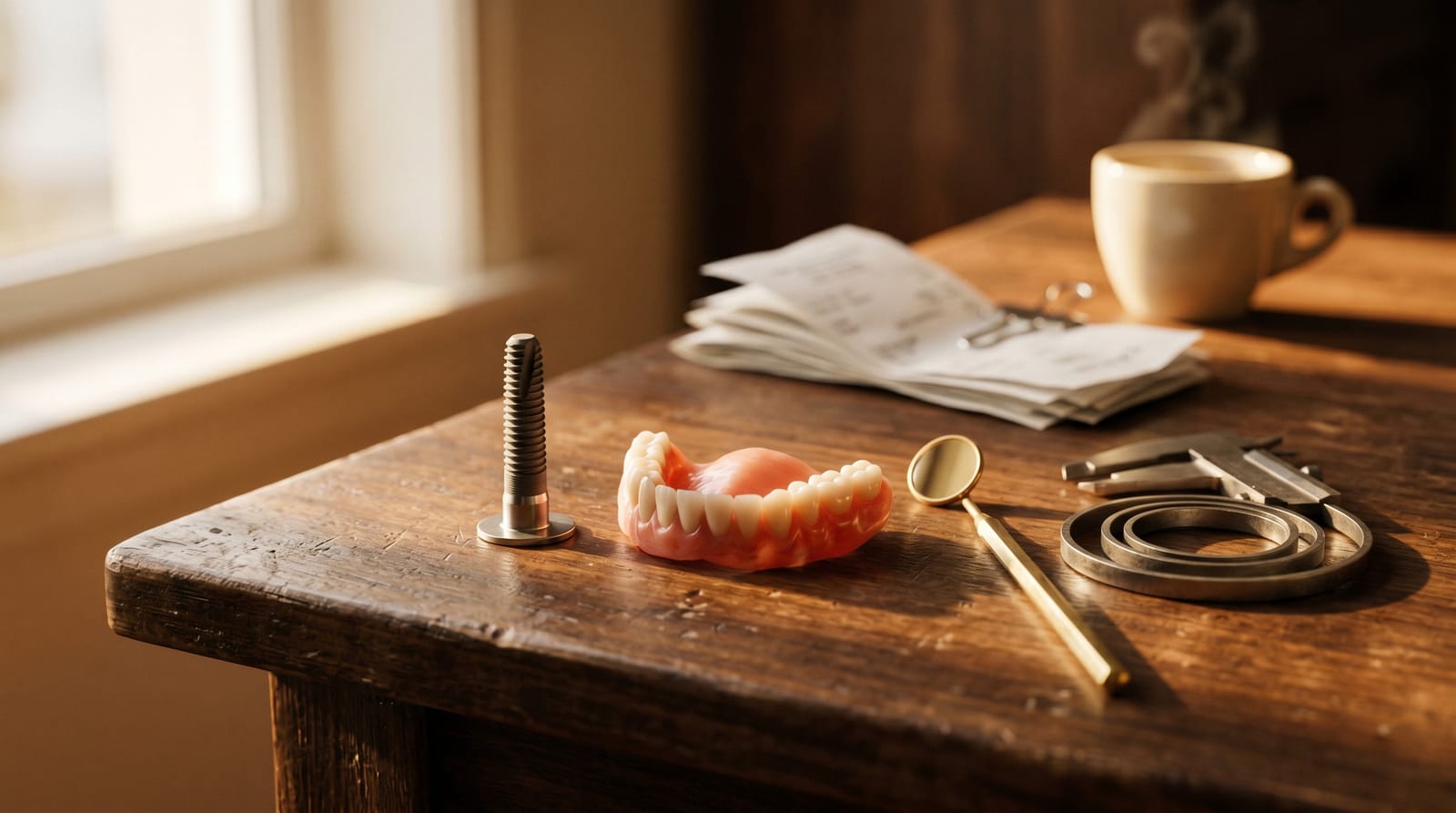
What Are Full Mouth Dental Implants?
Full mouth dental implants replace teeth across the upper and lower jaws using implant-supported restorations. Treatment may consist of one full-arch restoration for each arch, and the design may be fixed or removable.
Your mouth has two arches: the upper and the lower. In this guide, a “full mouth” budget covers both. Quotes may instead state a price for one arch, so identify the unit before comparing any figures.
This guide focuses on cost. It explains what can change the total, what a complete written quote should include, and how to compare providers before you commit.
Tooth Compass does not publish its own full-mouth price range. We do not have a representative sample of current provider quotes, claims or patient payments from which to calculate a defensible national average. Confirm the clinically appropriate design and itemized total after an examination by a licensed dentist.
How to Find the Cost of Full Mouth Dental Implants in 2026
Start by identifying the exact comparison unit: one upper arch, one lower arch or both arches. Then identify whether the proposal is removable or fixed, its implant count, temporary and final prostheses, material, preparatory work, anesthesia, imaging, laboratory work and follow-up.
Ask each office for those fields and the complete cash price in writing. If insurance may contribute, request a pre-treatment estimate for the proposed codes and keep the estimated plan contribution separate from the provider’s fee. If financing is offered, compare the disclosed total of payments with the cash price.
Cost Per Arch vs Cost Per Full Mouth
This is where an otherwise clear price can become misleading. A quote may be per arch - one upper or one lower - or for both arches. Do not infer the unit from “full arch,” “full mouth” or a starting-price headline. Require the written offer to name the arch or arches it covers.
Do not double a one-arch figure to predict a two-arch total. A real two-arch plan may use different procedures, materials or add-ons for each arch, so request a separate subtotal for the upper and lower arch.
Cost Per Tooth vs Cost Per Arch
It is tempting to multiply a single-tooth quote by the number of missing teeth, but full-arch pricing uses a different unit and design. A single-tooth proposal should identify one fixture, one abutment and one crown; a full-arch proposal instead describes an arch-level surgical and prosthetic system.
Full-arch systems can support a row of replacement teeth with fewer implants than replacement teeth. That is why a per-tooth figure cannot be multiplied across a full mouth to create a reliable estimate. Compare one-tooth, one-arch, and two-arch figures only within their stated units.
What Drives the Price of Full Mouth Implants
Full mouth implant quotes can cover different clinical and billing scopes. Understanding the parts helps you compare an estimate and identify what a starting figure does and does not include.
The biggest drivers include:
- Number of implants. A design using six implants has different hardware and surgical scope from one using four. Ask how the selected count changes the written subtotal.
- Implant material and system. A quote should identify whether it assumes titanium, zirconia, or another specified system and explain any price difference.
- Abutments and the final restoration. The plan should identify the connectors and whether the visible replacement teeth are a bridge, denture, or individual dental crowns, plus the material and related fees.
- Imaging and planning. Ask which examination, photographs, scans, or other imaging the treating team considers necessary and whether they are separate line items.
- Provider and facility structure. A plan may involve one or several clinicians, a laboratory, and separate surgical or restorative fees. Ask who performs and bills each phase.
- Location. Geography can affect an individual quote, but this guide does not claim a measured city or regional price difference.
Add-On Procedures: Extractions, Bone Grafting and Sinus Lifts
Preparatory work is one reason headline prices and complete quotes differ. If teeth need removal, the estimate should show how extraction is billed. A clinician may also recommend bone grafting or, for some upper-arch plans, a sinus lift.
Do not assume these steps are included or required. Compare the written clinical scope and the price attached to each item.
Treatment Options and How They Change the Cost
Full arch treatment is not one product. The system, implant count, prosthesis design, material, and included stages define the scope that a price represents.
Do not assume that a removable or fixed label alone predicts the fee. Compare the complete clinical design and every included stage across current written proposals for the same arch.
All-on-4, All-on-6 and 3-on-6 Explained
These are fixed full arch systems, named for how many implants anchor the arch.
- All-on-4 describes a full-arch design supported by four implants.
- All-on-6 describes a design using six implants for an arch.
- 3-on-6 describes three bridge segments supported across six implants.
Those names describe configuration, not suitability or a guaranteed price tier. Ask why the design is recommended, which components are included, and how changes in implant count or prosthesis design affect the written total.
Fixed vs Removable and Material Cost Tiers
The first fork is fixed versus removable. A removable implant-supported denture and a fixed implant-supported bridge have different hardware, maintenance, and laboratory scopes, so they should not be compared as if they were the same product.
The second fork is material. Common labels that may appear on a quote include:
- Acrylic - ask whether it describes a temporary, final, fixed, or removable prosthesis.
- Porcelain - ask which parts use porcelain and what framework supports them.
- Zirconia - ask whether the quoted amount includes the final zirconia prosthesis or treats it as a later upgrade.
A removable acrylic denture and a fixed zirconia bridge can differ enormously on the same arch. When comparing quotes, always check which system and which material each figure assumes, and get both in writing.
What a Complete Implant Quote Should Include
A complete implant quote is not a single number - it is a list. The clearest way to compare two providers is to ask each for a fully itemized written estimate, then check that the same line items appear on both. When an item appears in only one quote, ask whether the other provider bundles it, excludes it, or considers it unnecessary for that plan.
Here is what a thorough estimate should spell out:
- Consultation and imaging. The initial examination and any imaging selected for the case, with bundled and separately billed items identified.
- Extractions. Any remaining teeth that need removing, with the pricing unit stated.
- Preparatory procedures. Bone grafting or a sinus lift if your plan calls for them, with inclusion and pricing stated.
- The implants. The number of implants and the material (titanium or zirconia), listed per arch.
- Abutments. The connectors that sit between each implant and the visible teeth.
- The final prosthesis. The actual teeth - a fixed bridge, an implant-supported denture, or individual crowns - and the material tier (acrylic, porcelain, or zirconia).
- Follow-up visits. Any planned appointments included in the quoted price, and which ones fall outside it.
This is why a “starting at” figure is not enough to budget from. It does not disclose eligibility conditions or excluded work. Ask for the complete scope before deciding whether the starting figure applies.
A one-line total can still be legitimate, but it is difficult to compare. Ask for the relevant items above in writing, with inclusions, exclusions, units, and subtotals where available.
Insurance, Financing and Payment Plans
Dental coverage for full-mouth implant treatment varies by plan, procedure code, network rules, exclusions, deductible, coinsurance, and remaining annual or lifetime limits. Do not infer a benefit amount from a general article.
The only reliable way to identify a plan contribution is to check the relevant procedure codes and policy terms. Ask the provider’s office to submit a pre-treatment estimate to the insurer, then review what the response says about each stage before committing.
Payment options that a practice may offer include:
- In-house payment plans that spread the cost over several months.
- Third-party financing, which may include promotional or deferred-interest terms.
- Health savings or flexible spending accounts (HSA/FSA) when the expense and plan rules qualify.
Financing does not lower the total - it spreads it out, and interest can add to what you pay overall. Read the terms before signing.
How to Choose a Reputable Implant Provider
Choosing where to have full mouth implants placed is as much about the provider as the price. The person doing the work, and the estimate they hand you, tell you a lot before any treatment begins.
Use a few concrete questions to compare practices:
- Credentials and roles. A full-arch plan may involve an oral surgeon, a prosthodontist, a general dentist with implant training, or a combination of clinicians. Ask who places the implants, who designs and delivers the final teeth, and how responsibilities are divided.
- Laboratory workflow. Ask where the temporary and final prostheses are made, who handles adjustments, and whether laboratory revisions are included.
- Diagnostic plan. Ask which records and imaging are needed for your case and who reviews them.
- Itemized written estimates. Request enough detail to compare the same scope, materials, stages, and follow-up.
Questions to Ask and Red Flags to Watch For
Bring a short list to your consultation and ask directly:
- Is this price per arch or for both arches?
- How many implants does my plan include, and what material?
- Are extractions, grafting, or a sinus lift part of this quote?
- What material is the final prosthesis, and is follow-up included?
- Can I have the full estimate in writing?
Watch for these red flags:
- Quoting a firm price over the phone before any imaging or exam.
- Refusing to provide an itemized written estimate.
- Pressure to sign the same day, or a “today only” discount.
- Vague “starting at” figures with no detail on what is included.
Frequently Asked Questions
Does Tooth Compass publish a full-mouth dental implant price range?
No. Tooth Compass does not have a representative provider-price, claims or patient-payment dataset for this scope. Request current itemized proposals that identify whether they cover one arch or both and whether the design is fixed or removable.
Do same-day or “teeth in a day” options cost more?
Not necessarily. Same-day or “teeth in a day” describes timing, while the total also depends on implant count, temporary and final prostheses, materials, preparatory work, and follow-up. Compare the full written scope rather than the timing label.
Will dental insurance help pay for implants?
Sometimes, but coverage is plan-specific. Ask the insurer or plan administrator about the relevant procedure codes, exclusions, network rules, deductible, coinsurance, and remaining maximum, then request a written pre-treatment estimate.
Why do quotes vary so much between providers?
The totals may represent different implant counts, materials, preparatory procedures, clinical roles, laboratory work, or follow-up, or may simply use different fees for the same scope. Ask each provider for an itemized written estimate and confirm the total after a clinical assessment.
Medical disclaimer: This article is for general information only and is not medical, dental, or financial advice. Dental implant treatment involves surgery and individual clinical assessment. Only a licensed dentist or oral surgeon can determine whether implants are suitable for you and what your treatment will cost.
Financing: Payment options are examples, not endorsements or financial advice. Interest rates, fees, eligibility, coverage, and HSA/FSA rules vary - confirm all terms with the provider, insurer, plan administrator, and where relevant a tax professional.
Pricing method: Tooth Compass does not publish a full-mouth implant price average or directory-created range because it does not hold a representative sample of current provider quotes, claims or patient payments. Compare current written proposals for the same arch, design and included stages.
Find dental implants near you
Browse the dental implants practice directory to reach city comparisons that currently have enough evidence-matched profiles. Confirm the procedure and complete quote directly with each practice.
Browse dental implants clinics →
See the Dental Implant Cost and Quote Comparison Guide for the separate single-tooth scope, quote checklist and ZIP-level lookup method. For the component-by-component scope of one tooth - fixture, abutment, crown and possible preparation - read the dental implant cost guide.